
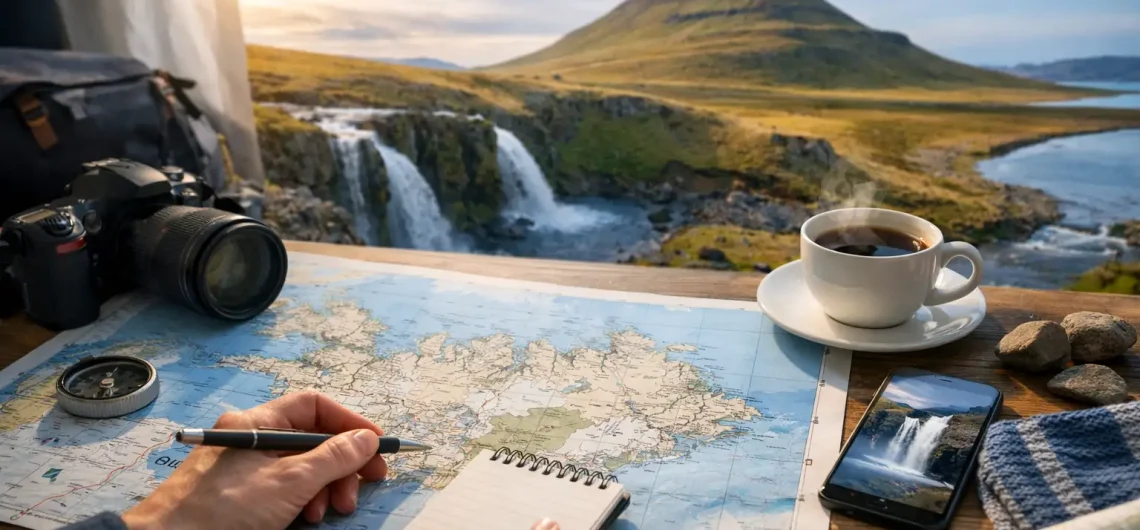
Most Iceland trips go wrong in one of two ways – people try to see everything, or they leave too much to chance. Both usually lead to long driving days, rushed stops, and missed moments in places that deserved more time. If you are wondering how to plan Iceland itinerary details in a way that feels effortless once you arrive, the real goal is not to fit in more. It is to build a route that matches your pace, priorities, and tolerance for changing weather.
That matters even more in Iceland than in many destinations. Distances can look manageable on a map, but road conditions, daylight, and simple human energy all shape what a day actually feels like. A beautiful plan on paper can turn into a tiring trip if every day starts early, ends late, and leaves no room for flexibility.
Start with the trip you want, not the map
The smartest way to begin is to decide what kind of Iceland experience you want to have. Some travelers want the iconic first visit – waterfalls, black sand beaches, a glacier lagoon, geothermal sites, and a few excellent hotels along the way. Others want privacy, slower days, and places that feel quieter and less exposed to crowds. Families may care most about easy pacing and comfort. Couples often want a balance of dramatic scenery and memorable stays. Friend groups may want more adventure and longer days.
This is where many itineraries become generic. They are built around a list of famous stops rather than around the traveler. A strong Iceland plan starts by choosing your priorities first: scenery, food, adventure, photography, hot springs, wildlife, luxury accommodations, or time in more remote landscapes. Once those are clear, the route becomes much easier to shape.
How to plan Iceland itinerary length realistically
The number of days changes everything. In Iceland, one extra night can transform the rhythm of a trip.
If you have four to five days, keep your focus tight. Reykjavik, the Golden Circle, the South Coast, and possibly a night near Jokulsarlon can make sense, but only if you accept that this will be a highlights trip. It can still feel exceptional, but it should not pretend to be comprehensive.
With six to eight days, you have room to breathe. This is often the sweet spot for first-time visitors who want a premium experience without racing. You can combine key southern sights with more thoughtful overnight stops and leave space for a glacier activity, a private geothermal experience, or less-visited areas near your route.
At nine to twelve days, the trip opens up. Now you can consider the Snæfellsnes Peninsula, North Iceland, or a fuller Ring Road journey. But even here, more days do not automatically mean you should circle the whole country. If you value comfort and depth, it is often better to do fewer regions well than to keep packing and unpacking for the sake of saying you completed the loop.
Choose one region as your backbone
A good itinerary needs structure. In Iceland, that usually means selecting one core route and building around it.
For first-time travelers, the South Coast is the most natural backbone. It delivers a remarkable concentration of landscapes with relatively straightforward logistics: waterfalls, volcanic beaches, glacier views, lava fields, and strong accommodation options. It also works well in shorter itineraries.
The Golden Circle pairs easily with this, especially at the beginning or end of a trip. It is not the wildest part of Iceland, but it is historically important and makes sense when planned thoughtfully rather than treated as a rushed checklist.
Snæfellsnes is a strong addition if you want more variety without committing to the full Ring Road. North Iceland offers powerful scenery and fewer crowds, but it works best when you have enough time to avoid making it feel like a long transfer. The Highlands are extraordinary, though they are not for every traveler and depend heavily on season, road access, and appetite for rougher terrain even in highly capable vehicles.
Build around driving reality, not ideal conditions
This is the part travelers often underestimate. Iceland rewards ambition, but it also punishes overpacked days.
A day with three scenic stops and a comfortable lunch can feel luxurious. A day with nine stops, multiple detours, and four hours of driving often feels like work. Even if the roads are good, constant arrival and departure takes energy. Add wind, rain, or low visibility and a simple transfer can become the main event of the day.
When planning, think in terms of experience density. One region with a few outstanding stops, time for a walk, and a relaxed dinner often feels richer than a full day of brief photo stops. This is especially true for travelers choosing private travel because the value is not just transportation. It is the freedom to stay longer where the day feels right and adjust when conditions shift.
Match the route to the season
Season is not a small detail in Iceland. It changes daylight, road access, crowd levels, and what kind of itinerary is realistic.
Summer gives you the longest days and the most route flexibility. It is the easiest time to cover more ground, and it opens up the Highlands and other interior areas. The trade-off is that it is also the busiest season, particularly around the most famous sites.
Winter creates a completely different trip. The landscapes are dramatic, the atmosphere is quieter, and the northern lights become possible. But daylight is shorter and weather has more influence on timing. Winter itineraries should be more conservative. This is not the season for relentless movement. It is the season for strategic routing, comfortable accommodations, and flexibility.
Shoulder seasons often give travelers the best balance. You may still have decent access and manageable crowds, while retaining more of Iceland’s feeling of space. But shoulder months are variable, which is exactly why local planning matters.
Leave room for what makes the trip feel personal
The best Iceland itineraries are not memorable because they included every major landmark. They are memorable because they had shape and personality.
That may mean adding a farm visit, a hidden canyon, a remote black sand stretch, a private guide who knows when to arrive after the buses leave, or a hotel chosen as much for its setting as for its amenities. It may mean protecting one afternoon with no agenda except a scenic drive, a geothermal soak, and a long dinner.
This is where premium planning earns its place. Iceland can absolutely be visited independently, but many travelers discover that self-driving asks them to become their own dispatcher, weather analyst, and logistics manager. A handcrafted private itinerary removes that friction. It also opens up better pacing and local choices that are hard to piece together from generic online advice.
How to plan Iceland itinerary days without overbooking
Think of each day in layers. Start with the essential movement – where you are sleeping and how far you need to go. Then add one major anchor, such as a glacier lagoon visit, a Super Jeep outing, or a geothermal experience. Only after that should you add secondary stops.
This keeps the day balanced. It also protects you from the common mistake of treating every attraction as equal. They are not. Some places deserve an hour. Others deserve a quick stop if conditions are good. A polished itinerary knows the difference.
Accommodation choice also matters more than many travelers expect. Staying in the right place can turn a rushed route into a calm one. One well-positioned countryside hotel can save hours of unnecessary backtracking and make the morning feel easy rather than packed.
Know when expert planning changes the trip
There is a difference between booking a trip and designing one. If your visit is short, if you are traveling in winter, if you want remote access, or if you simply do not want your vacation to feel like project management, expert itinerary design has real value.
A native-guided private approach is especially useful in Iceland because so much of the experience depends on timing, route sequencing, and weather-based judgment. It is not only about seeing more. It is about making better decisions throughout the trip. For many travelers, that means greater comfort, better access, and less wasted time.
At Discover Iceland, that often looks like a route built around your interests rather than a standard circuit – with luxury vehicles, local guides, and the flexibility to adjust each day when Iceland has its own ideas.
A well-planned Iceland itinerary should feel calm before it feels ambitious. If your route gives you space to look up, stay longer, and enjoy the day as it unfolds, you are probably planning it the right way.
