
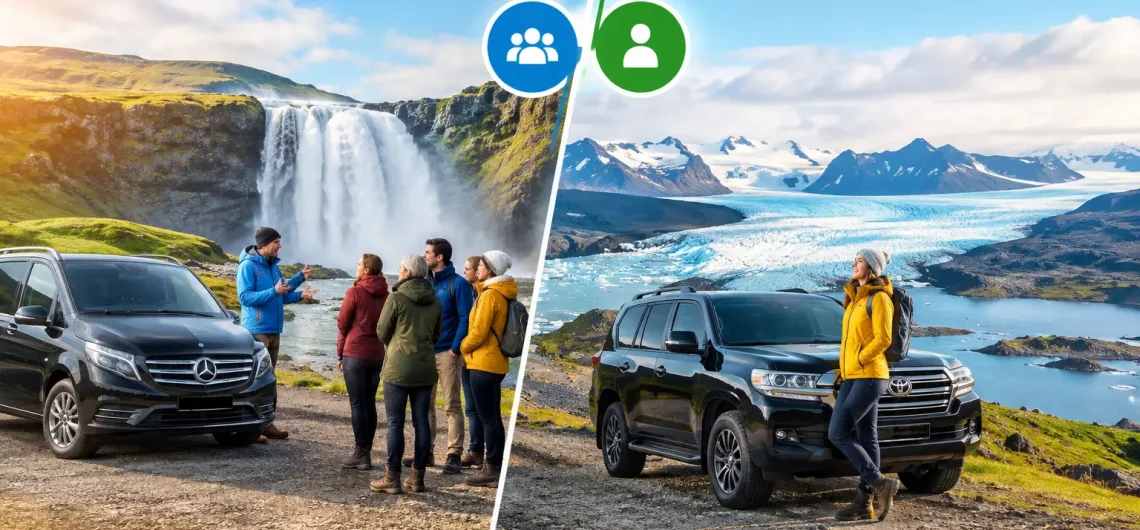
A winter road can close between breakfast and lunch. A clear forecast can become wind, sleet, and low visibility before you reach the next valley. That is why the guided tour vs self planning decision in Iceland is about far more than who holds the car keys. It shapes how much of your trip is spent managing details and how much is spent looking out the window at a landscape that keeps changing.
For some travelers, planning every stop is part of the pleasure. For others, especially those with limited vacation time or a wish to travel beyond the obvious route, a private guide brings a level of ease and access that is difficult to create alone. Neither approach is automatically better. The right choice depends on how you like to travel, when you are visiting, and what you want your days to feel like.
Guided Tour vs Self Planning: The Real Difference
Self planning puts you in full control. You choose the hotels, reserve activities, build the driving days, and decide whether to stop for a roadside waterfall or keep moving. It can be deeply satisfying for confident, independent travelers who enjoy research and are comfortable adjusting plans as conditions change.
A guided tour shifts the operational work to a local expert. On a well-designed private journey, that does not mean following a rigid flag or watching the clock for a crowded coach departure. It means beginning with an itinerary shaped around your interests, then having someone on hand who can adapt the day as weather, light, energy levels, and local conditions require.
The distinction matters most in a destination where the route itself is part of the experience. Iceland’s distances may look manageable on a map, but driving times can expand quickly with gravel roads, winter weather, photo stops, one-lane bridges, or a sudden desire to stay longer at a black-sand beach.
What a Private Guide Adds to the Experience
A native guide brings context that a map app cannot. You may see the same famous waterfall either way, but the experience changes when someone can explain the farm country around it, point out a less-visited viewpoint, or time your arrival around the busiest part of the day. The best guides also read the moment. If your family is tired, they can adjust. If the light is extraordinary, they know when it is worth staying.
Private travel also makes room for the parts of Iceland that rarely fit into standard group itineraries. That may mean taking a Super Jeep route into a remote landscape, choosing a quiet lunch stop, or visiting an overlooked valley because conditions are particularly good that morning. These are not promises that every hidden road will be available – access always depends on season, safety, and land conditions – but local knowledge creates more options.
Comfort is another meaningful advantage. A capable luxury vehicle gives you space for coats, camera gear, and the natural pauses that make a long day enjoyable. You arrive without navigating unfamiliar roads, studying weather alerts, finding parking, or wondering whether the next fuel station is far enough away to matter.
When Self Planning Is a Strong Choice
Self planning can be a wonderful fit for travelers who have time, enjoy driving, and prefer a looser rhythm. If you are returning to Iceland, traveling in summer, or focusing on a smaller area near Reykjavik, organizing your own route may feel straightforward. The long daylight hours of summer also offer more room for detours and slower travel.
It can work especially well when your priority is privacy without guided interpretation. Some travelers simply want a good vehicle, excellent accommodations, and the freedom to decide their day over coffee. In that case, thoughtful advance planning is essential: book accommodations early, build realistic drive times, understand road categories, and keep a backup plan for poor weather.
The trade-off is that you remain responsible for every decision. That includes deciding whether conditions are suitable for a particular road, rerouting around a closure, managing reservations, and knowing when an ambitious itinerary has become too ambitious. A self-drive trip can feel freeing, but it asks more from you than many first-time visitors expect.
Weather, Seasons, and the Cost of Lost Time
The case for a guided experience becomes stronger in winter and shoulder seasons. Short daylight, icy roads, powerful winds, and rapidly changing visibility can turn a simple drive into a demanding task. A local guide monitors conditions as part of the day’s work and can redirect the itinerary before a closure disrupts the plan.
Summer has its own complications. Popular landmarks can become busy, parking can be limited, and the best-known routes may feel more like a checklist than an escape. A guide can help you start at the right hour, approach a region from a less crowded direction, and balance iconic sights with quieter places.
There is a financial side as well. A self-planned trip may appear less expensive at first because the price is separated into rental car, fuel, insurance, hotels, activities, and meals. A private guided trip combines more of the experience into one tailored service, often at a higher upfront price. Yet the value is not only transportation. It includes itinerary design, expert driving, local judgment, and the ability to make good use of every day you have.
For a couple, self-driving may be the more economical choice if budget is the deciding factor. For a family or group of friends, the difference can narrow when you compare multiple rental vehicles, upgraded insurance, luggage space, and the convenience of traveling together. The more complex the itinerary, the more valuable guided planning tends to become.
Choose the Type of Guidance Carefully
Not all guided tours offer the same experience. A large group tour can be efficient and social, but it usually operates on a fixed schedule with set stops. It may be right for travelers who want a straightforward introduction to major sights at a lower price point.
A private tour is built around a different idea: your own group, your own pace, and an itinerary that reflects why you came. A photographer may want to chase early light. A multigenerational family may need shorter walks and a comfortable vehicle. A couple may care most about quiet landscapes, exceptional food, and time to linger. Those needs are difficult to serve through a one-size-fits-all route.
Before deciding, consider three practical questions. Do you enjoy managing logistics while on vacation? Are you comfortable driving in the conditions expected during your travel dates? And would local insight and flexibility make the trip more meaningful to you? Your answers usually reveal whether you need independence, support, or a mix of both.
A Thoughtful Middle Ground
You do not have to choose one approach for the entire trip. Many travelers combine a few independent days in the capital with a privately guided day or multi-day journey into regions where driving and planning are more demanding. This can preserve the pleasure of unstructured city time while giving you confident access to more remote landscapes.
That balance is particularly useful for first-time visitors. Spend time enjoying museums, restaurants, and geothermal pools at your own pace, then let a local host handle the roads, timing, and route choices when you are ready to travel farther afield. Discover Iceland can design that kind of journey around the pace, interests, and comfort level of your private group.
The best Iceland trip is not the one with the most pins on a map. It is the one that leaves enough room to notice the changing light, listen to the wind, and stay present when the landscape gives you a reason to stop.
